Fall armyworm, Spodoptera frugiperda, is the single most damaging maize pest to emerge in the last decade. Since arriving in West Africa in 2016 it has spread across sub-Saharan Africa, and into Asia and Oceania, forcing growers across Africa and Latin America to rethink how they detect and manage this pest. The first step of any sustainable program is the same everywhere: know when the moths are flying. That is exactly what fall armyworm pheromone lures and traps are built for.
Key Facts
- Spodoptera frugiperda was first reported in West Africa in January 2016 and within two years had reached more than 40 African countries.
- A single female can lay well over 1,000 eggs in her lifetime; the entire egg-to-moth cycle completes in roughly 30 days under warm conditions.
- FAO has repeatedly identified fall armyworm as a major threat to maize production and food security across Africa, Latin America and Asia.
- Males respond reliably to synthetic pheromone blends, which makes trap-based monitoring one of the most cost-effective early-warning tools available.
Why Fall Armyworm Punishes Guesswork
Fall armyworm larvae feed on more than 80 plant species, but maize is their preferred host, and the damage pattern is distinctive: young larvae feed in the whorl, producing ragged "window pane" leaves and sawdust-like frass. The economic problem is timing. By the time visible whorl damage is widespread, the larvae responsible are often in late instars — the hardest stage to manage and the most expensive to reverse.
Unlike some pests, fall armyworm moths are strong fliers and migrate long distances on wind currents, which means local pressure can change dramatically within days. A fixed calendar spray schedule wastes inputs in quiet weeks and leaves the crop exposed in peak flights. Monitoring closes that gap.
How a Fall Armyworm Pheromone Lure Works
The female fall armyworm moth emits a species-specific blend of sex pheromone compounds to attract males at night. A commercial fall armyworm pheromone lure reproduces that blend in precise ratio and loading inside a controlled-release matrix — typically a rubber septum or a polymer substrate. Male moths follow the synthetic plume instead of the natural one and end up in the trap, giving you a nightly census of flight activity.
Two quality factors decide whether the data is worth anything:
- Blend accuracy: Spodoptera frugiperda has close relatives (S. exigua, S. litura, S. littoralis) whose pheromones overlap partially. A poorly tuned lure can attract non-target species and inflate counts, or under-catch when you most need signal. Manufacturer-grade chemical purity and ratio control matter here.
- Release consistency: the lure must emit near-constant levels for weeks in 35 °C field heat and high humidity. We batch-test loading and release rate in our own synthesis facility before export.
Trap Types and Placement for Maize
Pheromone lures are used inside physical trap bodies, and the right choice depends on program scale:
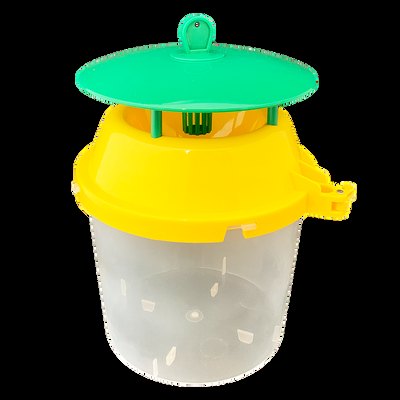
- Bucket (funnel) traps — the workhorse for large-area maize monitoring in Africa and Latin America. High capacity, easy to service, robust in heavy rain. See our pheromone trap range.
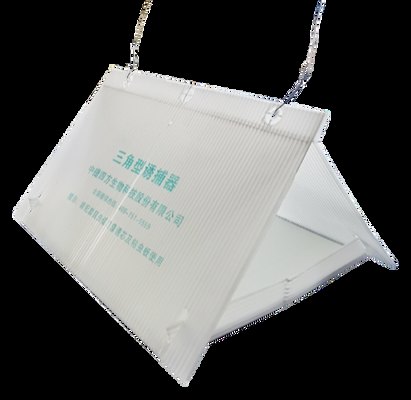
- Delta traps — compact sticky-card traps suited to smallholder demonstration plots and dense trap grids where visibility of counts matters.
- Wing traps — a middle option with good capture and easy inspection, widely used in national surveillance networks.
Placement rules of thumb that hold up in the field:
- Deploy traps before crop emergence or at minimum before the first expected moth flight, so the first generation is tracked from the start.
- Position traps just above canopy height and secure them so they stay level as maize grows.
- For field-scale monitoring, one trap per 1–5 hectares is a common starting density; add traps along edges and near last season's hotspots, since moth entry often concentrates there.
- Record catches at a fixed interval (twice weekly is typical) and log them against planting date and growth stage.
From Trap Counts to Decisions
A pheromone trap is an early-warning instrument, not a stand-alone verdict. Good programs combine trap data with in-field verification:
- Flight peaks predict egg lay. A sharp rise in moth catches typically precedes egg-laying waves by a few days; scouting for egg masses and small larvae should intensify immediately after a peak.
- Thresholds are local. National programs and NGOs use varied action thresholds — from a handful of moths per trap per night to weekly cumulative counts — depending on maize stage and market. Use your local recommendation, and treat the trap trend as the trigger to scout, not to spray blindly.
- Whorl inspection confirms pressure. Check 10 consecutive plants in at least 5 spots per field for fresh leaf damage and live larvae. Trap data plus plant inspection gives the truest picture.
This is the core of an integrated pest management (IPM) approach: measure first, intervene precisely, and preserve natural enemies that suppress fall armyworm eggs and larvae for free.
Where Mating Disruption Fits
Beyond monitoring, the same pheromone chemistry powers mating disruption (MD): dispensers release synthetic pheromone at high aerial concentrations so males cannot locate calling females, and mating collapses across the population. MD is an established, regulator-recognized tactic for codling moth, European grapevine moth, oriental fruit moth and other species, and programs targeting Spodoptera species are an active area of development. Its practical requirements are important to plan for: a large contiguous area (about 10 hectares minimum), low-to-moderate starting pressure, and deployment before the first flight. For suitable blocks, our mating disruption dispensers pair with monitoring traps — inside a working MD area, trap catches should fall toward zero, which is itself the proof of coverage known as trap shutdown.
What an IPM Program Looks Like Over a Season
- Pre-season: install traps at target density; map hotspots from last season.
- Vegetative stage: track moth flights; scout whorls after each catch peak; remove and destroy egg masses where practical in smallholder settings.
- Reproductive stage: maintain trapping; if pressure justifies intervention, prefer selective, low-residue options to protect beneficial insects.
- Post-harvest: destroy crop residues that host pupae; service and store traps; order replacement lures on a fixed schedule.
Choosing a Lure and Trap Supplier
For distributors, importers and agro-dealers, three criteria separate a dependable fall armyworm lure from a commodity one: chemical consistency between batches, field-proven release duration under tropical conditions, and technical support for trap density and interpretation. Pherobio Technology has manufactured insect pheromone products since 2003 — with 200+ products in the portfolio, in-house semiochemical synthesis, and exports to North and South America, Europe, Africa and Southeast Asia — and supplies lures, traps and mating disruption dispensers as matched systems. If you are building a monitoring program or a product line for maize markets, talk to our technical team about species blends, packaging and volumes.
Key Takeaways
Fall armyworm moves fast and punishes late reaction. Synthetic-pheromone lures in bucket or delta traps give a reliable early signal of moth flights, one trap per 1–5 ha is a common starting grid, and counts should always be paired with whorl scouting. At larger scales, mating disruption built on the same chemistry offers a residue-free, resistance-proof layer of control.
Frequently Asked Questions
How does a fall armyworm pheromone lure work?
The lure releases a synthetic copy of the female Spodoptera frugiperda sex pheromone. Male moths follow the scent plume into the trap and are captured, so catch numbers reflect local flight activity and help predict larval pressure in the crop.
How many pheromone traps per hectare are recommended for fall armyworm monitoring?
For routine field scouting, one well-placed trap per 1–5 hectares is typical, with extra traps along field edges and near previous hotspots. Combine trap counts with whorl inspections before any treatment decision.
When should I start trapping for fall armyworm?
Deploy traps before crop emergence, or at least before the first expected moth flight of the season. In tropical and subtropical regions with continuous maize, run traps year-round because generations overlap.
How long does a fall armyworm pheromone lure last in the field?
Under typical tropical conditions, most rubber-septum or matrix lures stay attractive for 4–6 weeks. Replace lures on a fixed calendar schedule and keep sticky inserts clean and serviceable.
Can mating disruption control fall armyworm?
Mating disruption with synthetic pheromone is an established tactic for several orchard and vegetable moths and is being developed for Spodoptera species. It needs a large contiguous area and works best at low-to-moderate pressure, combined with monitoring traps and sound agronomy.